Top Precision Fluid Component Connector Manufacturers for Medical, Biopharma, Dental and more!
Top Precision Fluid Component Connector Manufacturers for Medical, Biopharma, Dental and more!
Spending twenty minutes in Sephora debating a $90 face cream is more common than anyone admits. You pick it up, try the tester, and it feels genuinely incredible, like your skin just got fitted for a custom suit. So you buy it. You get home, crack open your own jar, and something is… different. It’s thinner. Less alive. The “bounce” just seems to not be the same.
You’re not being paranoid. The cream you tested and the cream you bought may have started as the same formula, and then one of them got roughed up in transit. Not physical transit. Manufacturing transit.
The culprit has a name: ingredient shear.
Good skincare texture isn’t an accident. Cosmetic chemists build incredibly precise internal structures inside a formula a kind of invisible scaffolding made from the interaction of oils, water, polymers, and active ingredients. That scaffolding is what gives a cream its weight, its slip, its feel. It’s the difference between a $12 drugstore lotion and something that costs more than your dinner.
Now imagine forcing that delicate structure through high-pressure industrial pipes at speed. That’s what happens on an automated filling line. If the machinery is aggressive enough, it doesn’t just move the product — it damages it. Polymer networks snap. The scaffolding collapses. By the time the formula reaches your jar, it’s technically the same ingredients, just… beaten up. Like showing up to a black-tie event and your outfit got crumpled in a bag the whole flight over. Still the same clothes. Not the same look.
That’s shear. And it’s more common than most people realize.
Here’s where it gets interesting, and also where Brevet comes in. Most people assume the pump is what brutalizes a formula. And yes, an aggressive pump can do damage. But one of the biggest stress points in a filling line is actually something less obvious: the connectors.
Standard T-junctions, the kind you’d find in a basic industrial setup, force fluid to make a sharp, abrupt turn. Think of it like merging onto a highway by driving straight into a concrete median and hoping for the best. That sudden collision creates friction hotspots where shear damage concentrates. Your vitamin C beads don’t stand a chance.
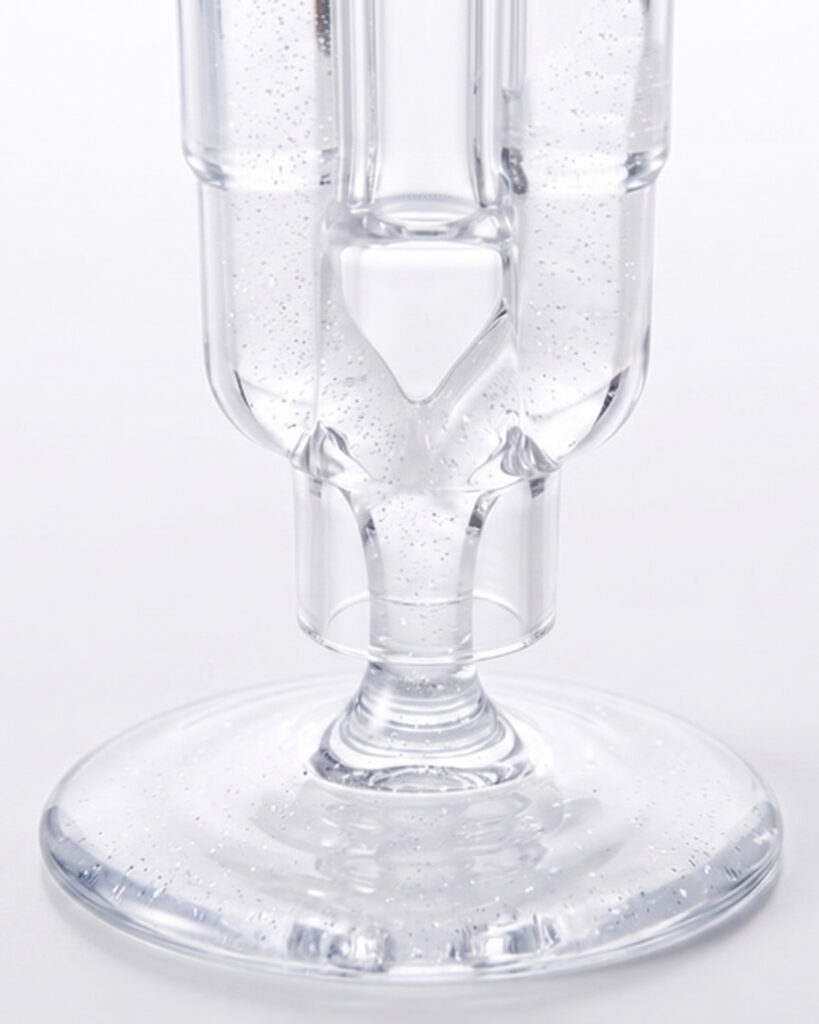
Brevet’s Parallel Y-Connectors solve this by changing the geometry of the problem. Instead of a sharp right-angle collision, the formula moves through a gradual 45-degree or parallel path. It slides rather than slams. The difference sounds subtle until you see what it preserves:
Thick creams stay thick, because viscosity is maintained rather than disrupted. Encapsulated actives (retinol, vitamin C, those little pearls of whatever expensive thing the brand is marketing) stay intact until they actually reach your skin, which is the whole point. And the formula holds together without separation or that oily “bleeding” you sometimes see in older product sitting in your medicine cabinet.
The manufacturers who care about what ends up in the jar, not just what’s on the label, are building what you might call a low-stress philosophy into the entire filling process. A few moves that make a real difference:
Replacing harsh pipe angles with Y-geometries keeps the fluid moving in smooth, parallel layers instead of turbulent chaos. It’s the same laminar flow principle that matters in medical-grade fluid systems, applied to your SPF serum.
Switching from high-speed gear pumps to peristaltic pumps changes the feel entirely. Peristaltic pumps move fluid with a gentle, rhythmic squeeze. Less “industrial machine,” more “actually treating the product with some respect.”
And filling containers from the bottom up, rather than pouring from the top, eliminates the air turbulence and bubble formation that can mess with texture and stability before the lid even goes on.
A well-formulated luxury skincare product is equal parts chemistry and craft. Someone spent serious time and money getting that texture right in a lab. The whole point of precision manufacturing is making sure that what arrives in your bathroom is actually what was designed in the lab, not a compromised version of it that got knocked around on the way.
When a brand invests in components built for low-shear handling, they’re not just buying better parts. They’re protecting the integrity of the formula all the way to the last pump.
So the next time a cream still feels exactly right on day 60 as it did on day one — that’s not luck. Someone upstream made a deliberate decision to handle it carefully. And honestly, that kind of attention to detail? It shows.
Brevet designs and manufactures precision fluid components for cosmetic, medical, and biopharma filling lines. If you’re building a process that needs to protect what’s inside the formula, talk to the Brevet engineering team today!
