Top Precision Fluid Component Connector Manufacturers for Medical, Biopharma, Dental and more!
Top Precision Fluid Component Connector Manufacturers for Medical, Biopharma, Dental and more!
Corrosion Resistance and Zero Galvanic Risk
In closed-loop liquid systems, mixing dissimilar metals like aluminum plates paired with brass or steel fittings, sets up the perfect conditions for galvanic corrosion. Over time, metal ions start leaching into the fluid. That creates debris that clogs narrow channels and slowly degrades your seals.
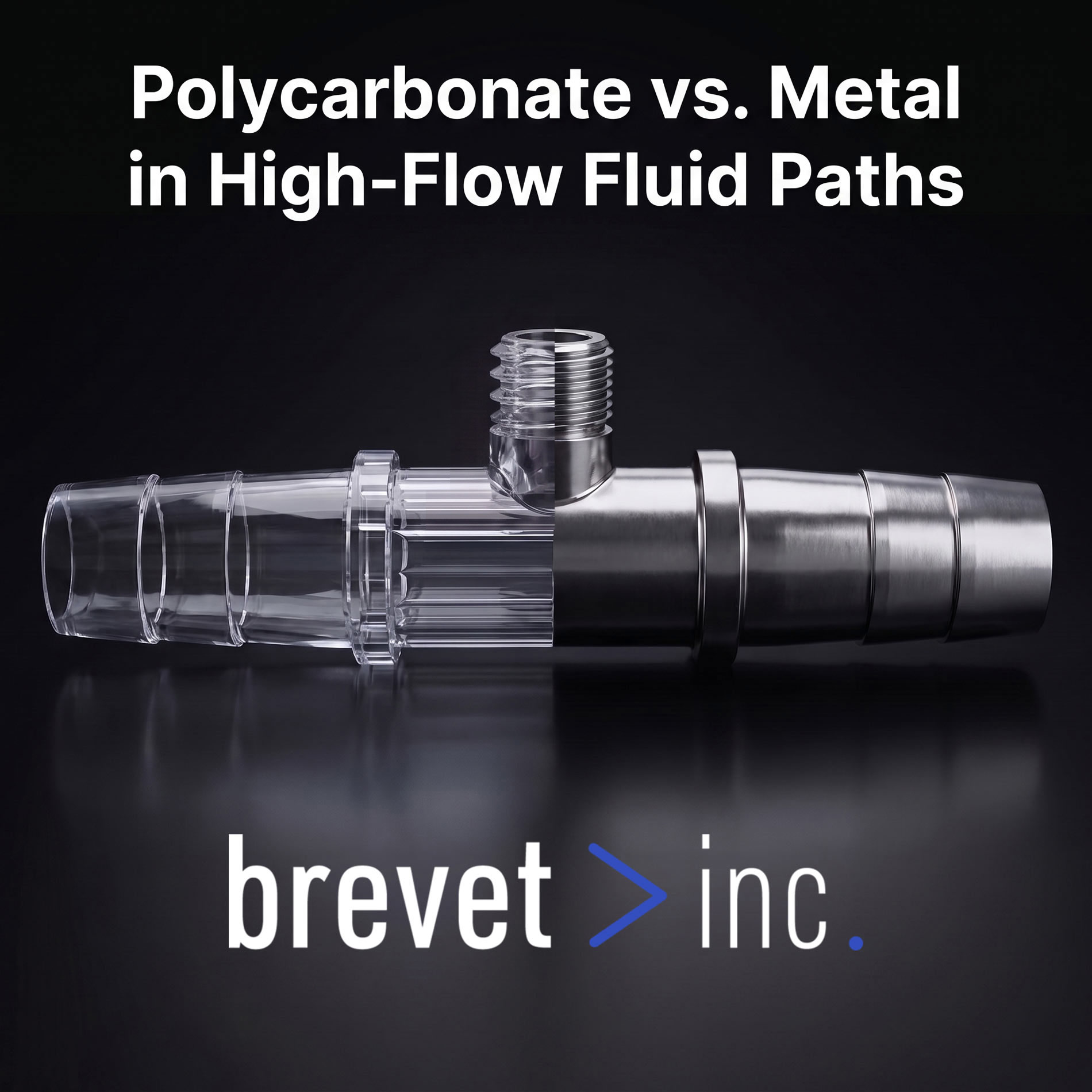
Optically clear polycarbonate sidesteps this whole entire problem. It’s non-conductive and chemically stable against a wide range of fluids and coolants, so corrosion risk basically disappears.
Seeing Inside the System in Real Time
Metal components are essentially black boxes. If you want to catch micro-bubbles, fluid stagnation, or particulate buildup happening inside a metal housing, you’re kinda stuck relying on complex sensor arrays or pulling the thing apart entirely.
Polycarbonate gives you glass-like optical clarity instead. Technicians and automated optical inspection systems can look straight into the flow path, verify bubble management and can confirm complete fluid fill, all in real time and without any guesswork at all.
Corrosion Resistance and Zero Galvanic Risk
In closed-loop liquid systems, mixing dissimilar metals like aluminum plates paired with brass or steel fittings, sets up the perfect conditions for galvanic corrosion. Over time, metal ions start leaching into the fluid. That creates debris that clogs narrow channels and slowly degrades your seals.
Optically clear polycarbonate sidesteps this whole entire problem. It’s non-conductive and chemically stable against a wide range of fluids and coolants, so corrosion risk basically disappears.
Seeing Inside the System in Real Time
Metal components are essentially black boxes. If you want to catch micro-bubbles, fluid stagnation, or particulate buildup happening inside a metal housing, you’re kinda stuck relying on complex sensor arrays or pulling the thing apart entirely.
Polycarbonate gives you glass-like optical clarity instead. Technicians and automated optical inspection systems can look straight into the flow path, verify bubble management and can confirm complete fluid fill, all in real time and without any guesswork at all.
Complex Geometries Without the Machining Bill
Machining complex internal radii, sweeping junctions, or dual-path splitters out of solid stainless steel takes a lot of labor and a lot of money. On top of that, sharp internal corners in machined metal parts create turbulence and pressure drops you’d rather avoid.
Precision injection molding flips that equation totally. Polycarbonate components can be produced with smooth, radiused internal channels that are actually optimized for fluid dynamics, and you get better flow characteristics while shaving off unit weight and production cost at the same time.
Built to Last Under Continuous Pressure
There’s a pretty common misconception that polymers just can’t hold up to metal’s structural integrity under continuous pressure. In reality though, when polycarbonate is engineered using heavy-gauge tooling and proper stress-relief processing, it delivers excellent impact strength, a high tensile modulus, and zero environmental stress cracking, even across millions of operating cycles.
Weighing the Two Materials Side by Side
When you line metal and polycarbonate up next to each other for high-flow fluid path applications, the tradeoffs become pretty clear:
Stainless steel and aluminum:
✅ High structural strength
❌ Vulnerable to galvanic corrosion when mixed with dissimilar metals
❌ Heavy, adding weight to the overall assembly
❌ Opaque, requiring sensors or disassembly to inspect flow
❌ Costly and labor-intensive to machine complex geometries
Precision-molded polycarbonate:
✅ Naturally corrosion resistant, non-conductive, and chemically stable
✅ Optically clear for instant visual inspection
✅ Lightweight, reducing overall system weight
✅ Moldable into smooth, complex internal geometries at lower cost
✅ Engineered for high impact strength and long-term reliability
Why This is Important for Your Next Design
If you’re designing a fluid path for a system that runs continuously, sees frequent inspection, or needs to stay lightweight without sacrificing durability, the case for polycarbonate keeps getting stronger and stronger. It’s not just a cheaper alternative to metal, it actually solves problems metal can’t solve on its own, like giving your team a clear view into the system without adding sensors or downtime for teardown.
That being said, getting these benefits depends entirely on how the part is engineered. A quick summary of what makes the difference:
The material grade matters. Not all polycarbonate resins are created equal, and the right grade needs to be matched to your specific fluid, temperature range, and pressure requirements.
The tooling matters just as much. Heavy-gauge, precision steel tooling is what allows for those smooth radiused channels and consistent wall thickness that keep the part strong over millions of cycles.
Stress relief cannot be skipped. Proper post-molding stress relief is what prevents environmental stress cracking down the road, especially in systems exposed to aggressive fluids or coolants.
Making the Switch with Confidence
Metal will always have its place in fluid path engineering, but for high-flow systems where corrosion resistance, visual inspection, and weight savings matter, polycarbonate is proving itself as the smarter long-term choice. At Brevet, we engineer precision polycarbonate fluid path components built to handle the demands of continuous, high-reliability operation, without the drawbacks that come with metal.
