Top Precision Fluid Component Connector Manufacturers for Medical, Biopharma, Dental and more!
Top Precision Fluid Component Connector Manufacturers for Medical, Biopharma, Dental and more!
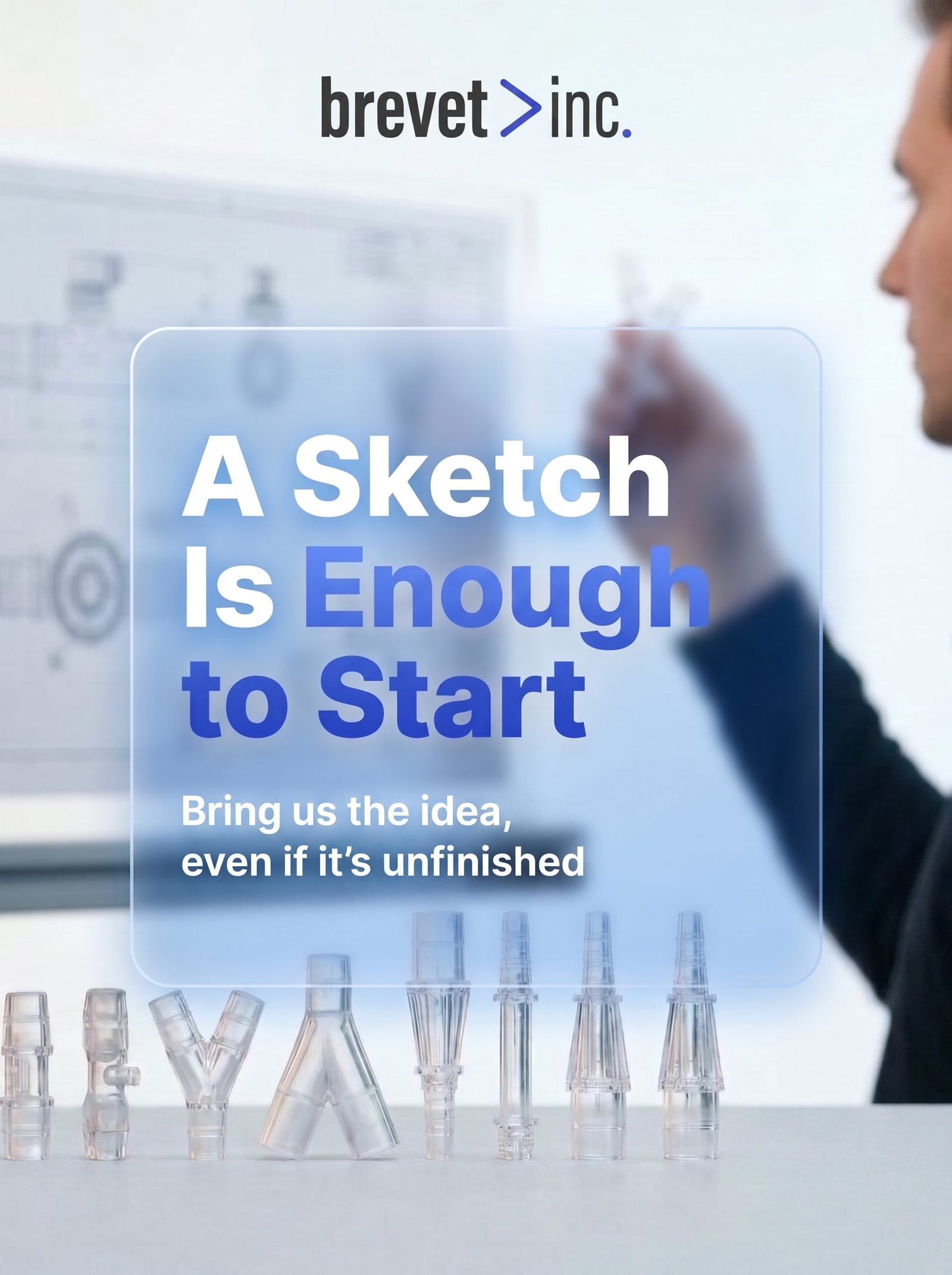
A lot of good projects show up unfinished. Sometimes there’s a full CAD file and a tight set of specs. Just as often, somebody brings us a sketch, a few measurements, and a problem they’re tired of working around.
That’s fine. Honestly, it’s normal. What matters isn’t how polished the starting point looks. What matters is whether the team taking it on asks the right questions early, before tooling money gets spent and small assumptions turn into expensive ones.
Every time a project changes hands, a little context walks out the door with it. The drawing survives. The reasons behind the drawing don’t always survive.
Design intent gets lost. A tolerance that looked arbitrary on paper turns out to be the thing that keeps a seal seated under pressure.
Materials get treated as interchangeable. They’re not. Swapping one plastic for another can change clarity, strength, chemical resistance, and how a part handles sterilization.
Put design, prototyping, and production under one roof and those conversations get a lot shorter. There’s nobody to blame, and nowhere for details to hide.
General shops can make a lot of things well. Fluid components are a narrower world, and the failures are sneaky. Parts can pass a visual check and still disappoint you in the line.
Teams come to us for connectors, fittings, valve assemblies, and full fluid path assemblies because that’s the work we do every day. It’s not a side category for us.
It also changes the questions we ask. We’ll want to know what runs through the part, what it connects to, how it gets assembled, and who handles it at the other end. Those answers sound like details. On fluid parts, details are pretty much the whole story, and catching them early is a lot cheaper than catching them in validation.
We keep the process plain, and we tell people where they stand. Most custom projects move through the same four stages, even if the parts themselves look nothing alike.
From kickoff to delivery, most new custom products land in about three to four months. Complex parts and heavier testing can stretch that, and we’d rather say so up front than promise a date we don’t believe.
Good parts aren’t saved by a last look at the end of the line. By then, you’re mostly sorting good work from bad work, and that’s a waste of everyone’s time.
We check dimensional accuracy as parts move through production, and our quality management system sits behind the whole job. For medical work, that includes our ISO 13485 certified processes. It sounds dull on paper. In practice, it’s why lots behave the same way month after month.
It’s also why customers hear from us during a job, not just at the end of one. If a material lead time moves or a test needs another look, you should know about it while there’s still time to make a sensible decision.
At Brevet, we like being brought in early, while the design can still move. Whether you have production ready files or a rough idea for a connector that doesn’t exist yet, our engineers can help you work out what it will take to make it real, and make it repeatable.
If you’re weighing contract manufacturers for a fluid component, reach out to the Brevet engineering team and tell us what you’re building. We’ll give you a straight read on it.
