Top Precision Fluid Component Connector Manufacturers for Medical, Biopharma, Dental and more!
Top Precision Fluid Component Connector Manufacturers for Medical, Biopharma, Dental and more!
In the 1960s, a quiet revolution in precision tooling met the bold frontier of cardiopulmonary bypass. Here is the story of how our 118 Perfusion Adapter earned its place in medical history.
Step inside a surgical suite in the mid-1960s and you would witness a scene that once belonged strictly to science fiction. Doctors and nurses stood huddled in quiet focus around an open chest, watching a rhythmic, humming console, take over the work of the human heart and lungs.
In those early days of open-heart surgery, every tick of the clock felt monumental! The heart-lung machine was still finding its footing, and maintaining full extracorporeal circulation for even sixty to ninety minutes was considered an astonishing medical triumph. Keeping a patient stabilized on bypass for two or three hours pushed the outer boundaries of human endurance, surgical technique, and of course clinical trust.
Behind that miracle was an unspoken pact. Surgeons could perform the delicate work of repairing valves and grafting bypasses only because they believed, without hesitation, in the integrity of every tube, clamp and fitting, carrying the patient’s vital flow.
At Brevet, we were right there beside them.
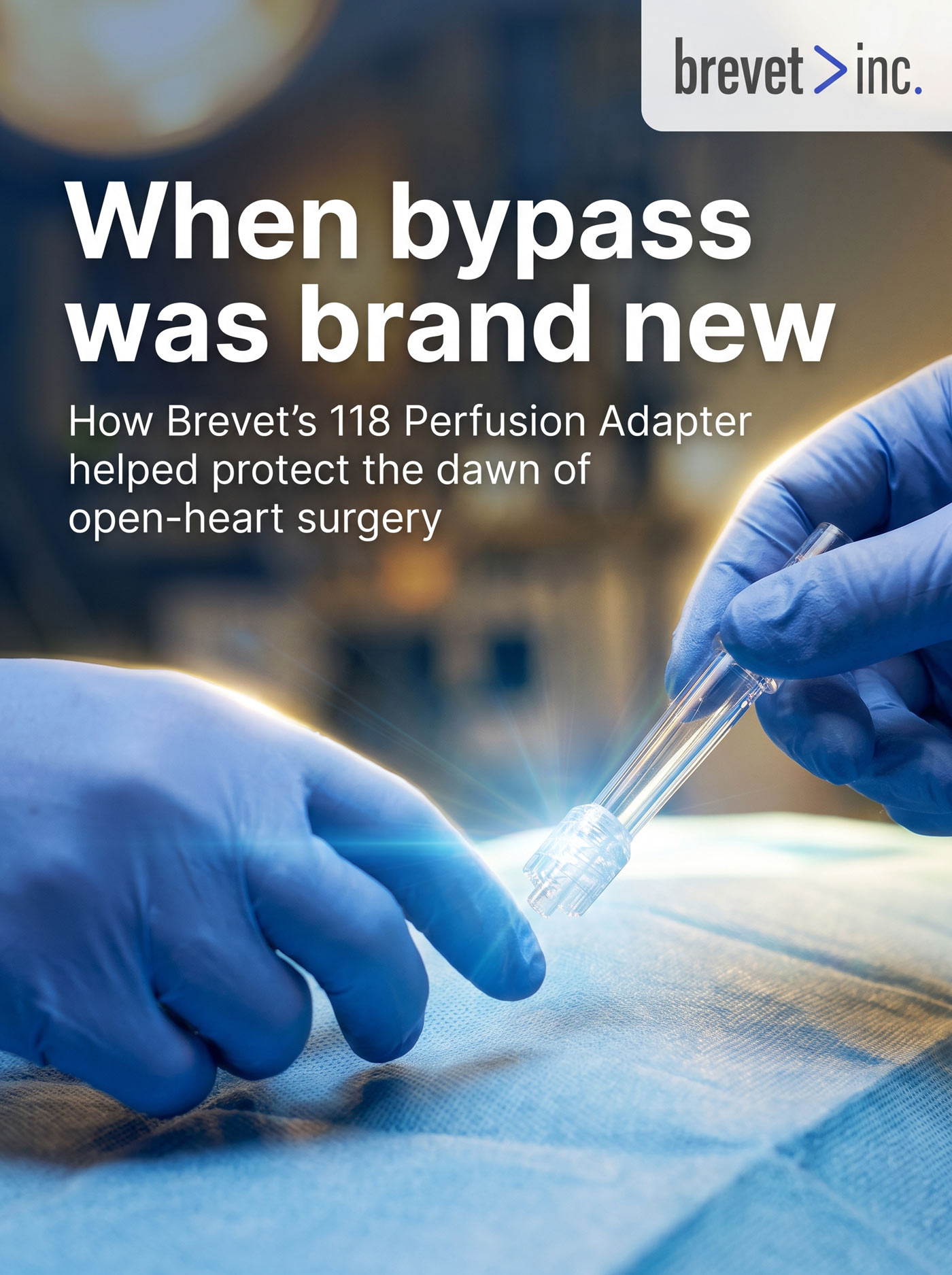
Long before our components entered sterile operating rooms, our obsession with precision began in the toolroom.
During the formative years of high-tolerance manufacturing, producing complex, ultra-smooth fluid path geometries was an unforgiving art. We turned to Electrical Discharge Machining, or EDM, using controlled electrical sparks to erode hardened steel blocks into pristine negative impressions. Through EDM, our toolmakers achieved mirror-like finishes, exact parting lines, and microscopic dimensional tolerances that standard milling could never touch.
This mastery over moldmaking gave us an uncommon advantage. When medical pioneers needed fluid pathways that were completely free of rough edges, internal turbulence, and micro-defects, they turned to molders who understood that tooling was not just metalwork. It was a matter of human care.
Those EDM-machined cavities laid the groundwork for medical components that could channel blood gently, smoothly, and without trauma.
Out of that relentless tooling discipline came the 118 Perfusion Adapter.
In a cardiopulmonary bypass circuit, blood travels through an intricate web of specialized tubing, heat exchangers, and oxygenators. Every junction presents a critical risk. Even a minor ridge inside a connector can sheer delicate red blood cells or create micro-thrombi. A loose fit or an imperfect barb risks catastrophic pressure drops or air ingress.
The 118 Perfusion Adapter was engineered to solve those exact fears. Molded from clear, clinical-grade medical polycarbonate, it offered doctors crystal-clear visibility into fluid transfer while delivering an unwavering mechanical seal. It provided smooth internal tapers that allowed whole blood to glide seamlessly from circuit to cannula, preserving vital cell structures when patients needed it most.
For perfusionists who spent grueling hours monitoring arterial lines, our connector was not just another catalog part. It was peace of mind. When life hung in the balance, the 118 adapter held firm.
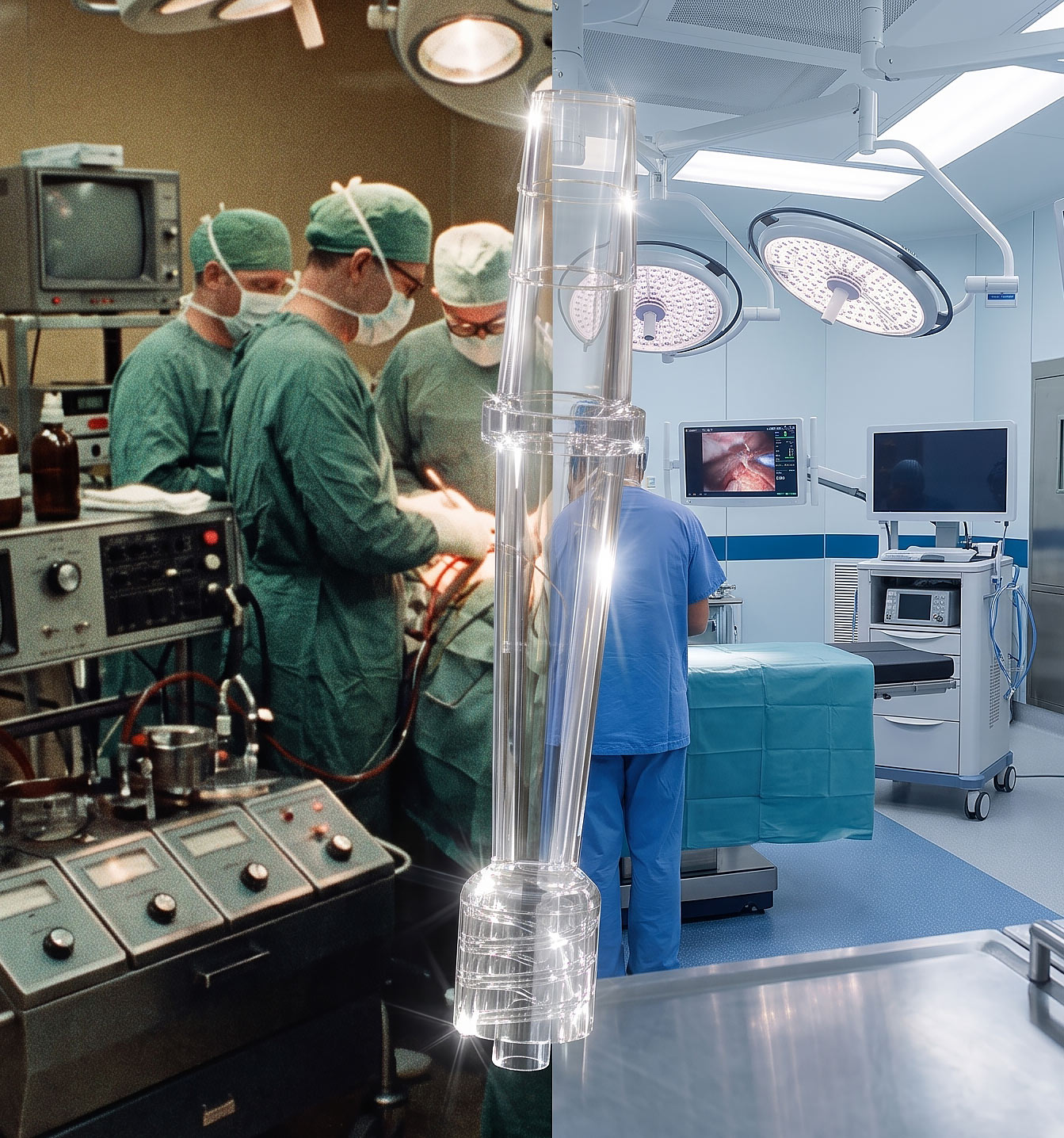
Much has evolved since the pioneer days of the 1960s. What was once considered a breathtaking three-hour bypass has evolved into routine clinical practice, and modern cardiovascular teams routinely manage complex interventions that extend four hours or more with exceptional outcomes.
Just as surgical care has advanced, so has Brevet.
Our original EDM heritage has blossomed into multi-axis CNC micro-machining, automated vision-inspection systems, and closed-loop robotic cleanroom molding. We measure tolerances today in sub-micron increments, ensuring that every batch of perfusion adapters matches the blueprint with absolute mathematical repeatability.
Yet, despite all the digital sensors, computer-aided designs, and high-tech quality controls, the heart of our facility has never changed. We still view mold design as a sacred craft. We understand that every fluid connector we press into the world may one day sit between a beating heart and a second chance at life.
When you look back over sixty years of medical innovation, machines grow sleeker and technologies continually change. But the fundamental need for human-centered reliability remains timeless.
We are proud to have supported the visionary doctors and perfusion teams who dared to stop a human heart and restart it again. And as we look to the future of biopharma, organ preservation, and next-generation cardiac care, Brevet remains dedicated to the very same mission we embraced in the 1960s! Engineering the critical fluid paths that protect life, one connection at a time.
