Top Precision Fluid Component Connector Manufacturers for Medical, Biopharma, Dental and more!
Top Precision Fluid Component Connector Manufacturers for Medical, Biopharma, Dental and more!
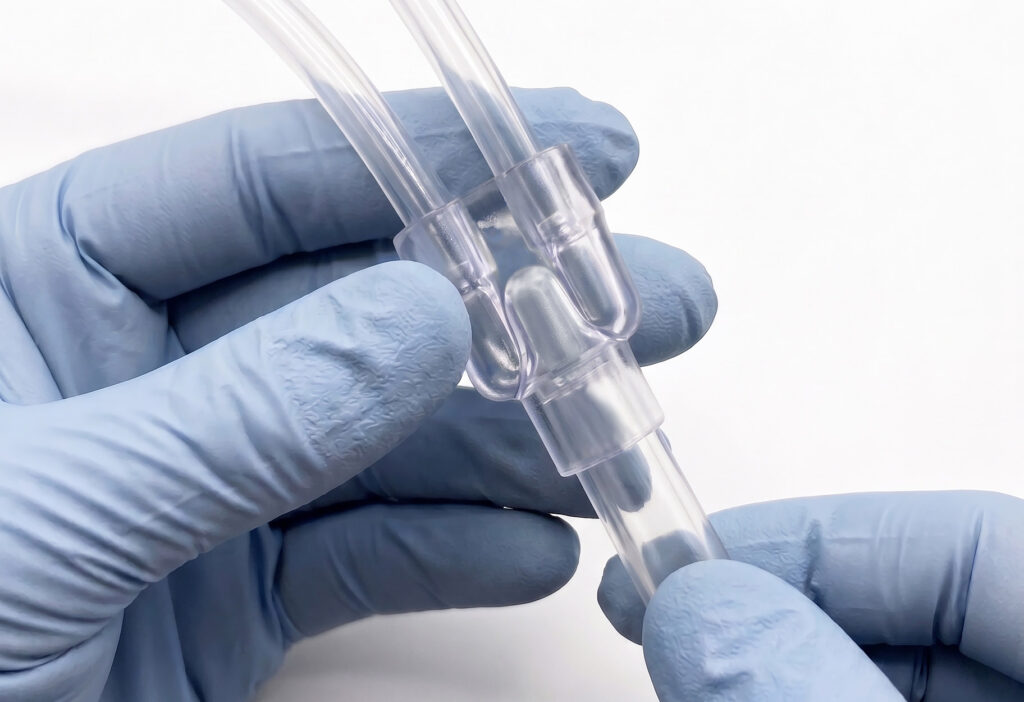
In high-stakes medical device R&D, there’s really no such thing as a “minor” leak. When you’re managing fluid paths for neurovascular or dialysis applications, a single failure during pressure testing doesn’t just mean a wet bench — it means weeks of documentation, root-cause analysis, and a timeline that’s suddenly slipped by a month you didn’t have to spare.
Here’s the thing most engineers figure out the hard way: the majority of fluid-path failures aren’t caused by bad components. They’re caused by bad interfaces. Mixing and matching “close enough” connectors from different vendors is a gamble, and the veterans in this space have mostly stopped taking it.
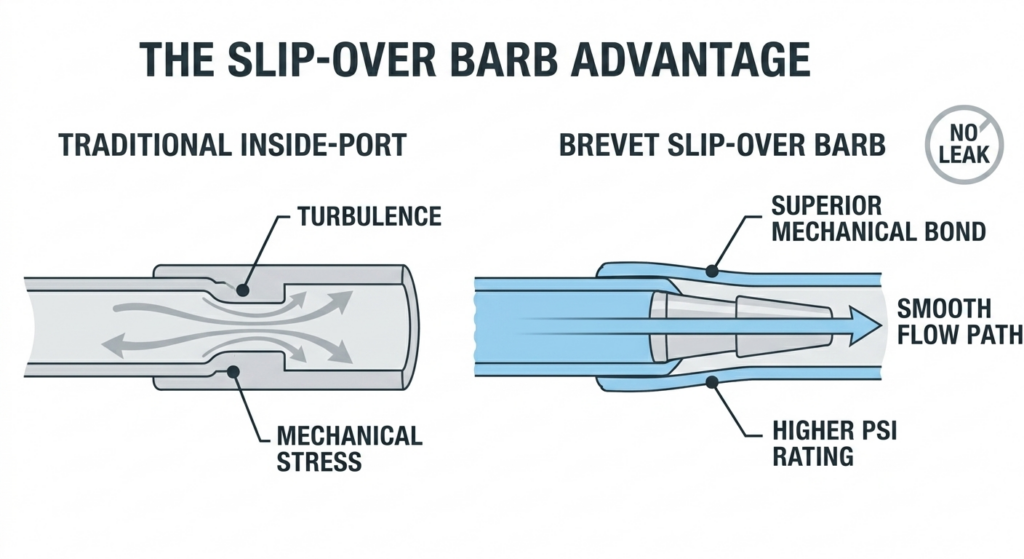
The Engineering Edge: The Slip-Over Barb
Tube-to-port integration is one of the most common pain points in prototyping, and it’s easy to see why. Traditional inside-port insertions — where the tube is essentially stuffed into a hole — create turbulence and mechanical stress that compound over time.
Brevet’s validated kits use a slip-over barb design instead. The medical tubing slides securely over the outside of the connector barbs, which creates a stronger mechanical bond with less fuss. It handles higher PSI, and it eliminates the need for secondary adhesives that can introduce leachables into your fluid path. Cleaner, stronger, and a lot more predictable — especially when you’re deep into a testing cycle and the last thing you need is a variable you didn’t plan for.
Clean from the Start: The Sealed Pouch
Precision engineering only gets you so far if your components show up with bench-top debris already on them. Every Brevet kit ships in a medical-grade sealed pouch, so the first time those parts see the open air is when you’re actually ready to use them. That matters more than people sometimes realize — particulate contamination is a real concern when you’re working with the tight tolerances of neurovascular catheters or blood-contacting surfaces. It’s one of those details that’s easy to overlook until it isn’t.
From “Off-the-Shelf” to “Built with Brevet”
The Kit Hub is a starting point, not the end of the conversation. The goal is always a kit that actually fits your workflow, not one you have to work around.
When you get into it with the team, it’s a real back-and-forth. You can swap manifolds, change luer lock orientations, adjust tubing lengths to match your specific rig. They’re not just taking an order; they’re pressure-testing the logic with you. Think of it less like a vendor relationship and more like having an R&D extension that already speaks your language.
Versatility Across the Fluid and Air Spectrum
Brevet built its reputation in some of the most demanding corners of medical device development, but the same validated fluid-path logic applies anywhere precision isn’t optional. Custom kits are currently in use across:
Sector | Application Focus |
Neurovascular | High-pressure delivery and micro-catheter connections. Micro-catheter connections leave almost no room for variation, and these kits are designed around those tight tolerances from day one. For teams working on embolization systems or intracranial delivery platforms, a pre-validated fluid path takes one major variable off the table. |
Dialysis & Blood Tech | Large-bore fluid management with zero-leak tolerances. High flow rates, repeated cycling, and zero tolerance for leaks in a clinical setting demand more than a generic connector. These kits are built specifically for the mechanical and biocompatibility requirements of dialysis circuits and blood processing equipment. |
Biopharma | Single-use technology (SUT) for sterile fluid transfer. Single-use technology only works if the components are as reliable as the permanent systems they replaced. These kits are built for sterile fluid transfer where contamination control and traceability aren’t optional — they’re the whole point. |
Pneumatics & Air | A poorly designed air path in a ventilator or diagnostic device carries the same consequences as a fluid path failure. These kits bring the same precision-fit approach to pneumatic systems, ensuring consistent pressure delivery and reliable sealing across the full operating range. |
Industrial Tech | High-purity material science and chemical processing require fluid paths that resist aggressive media without degrading or leaching back into the process. These kits use materials selected for the specific demands of the application, not whatever happened to be in stock. |
When you move to pre-validated connector kits, you’re not just buying parts. You’re buying a system that’s already been through the gauntlet. Your fluid path shouldn’t be a science project — it should be a solved problem.
